To get rid of ants properly, you need to kill the queen, not just the workers. The only way to do that without digging up the nest is to use a slow-acting gel bait. Workers eat it and carry it back to the colony, where it is shared with the queen and larvae. It takes a few days, but it eliminates the source. Spraying workers is counterproductive and just breaks up the trail temporarily.
How do ants get into your house?
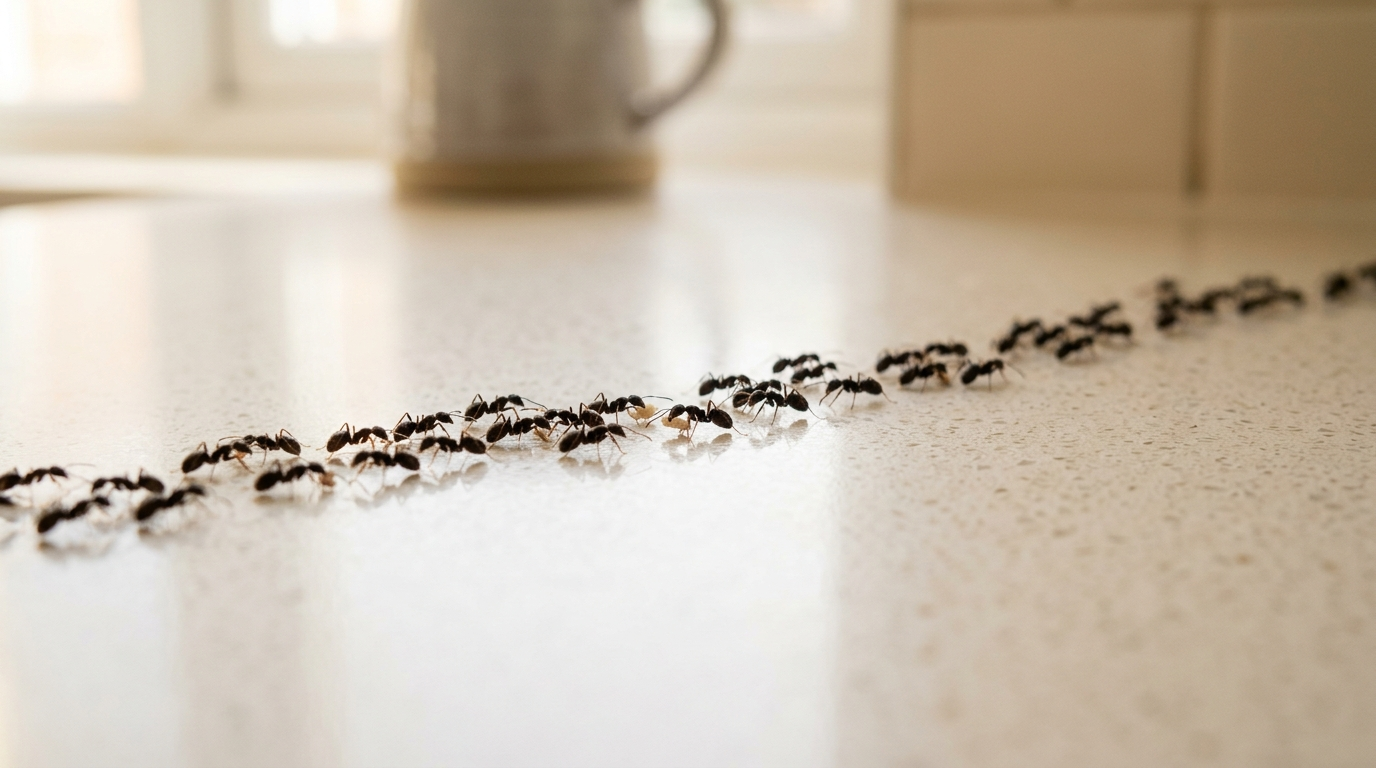
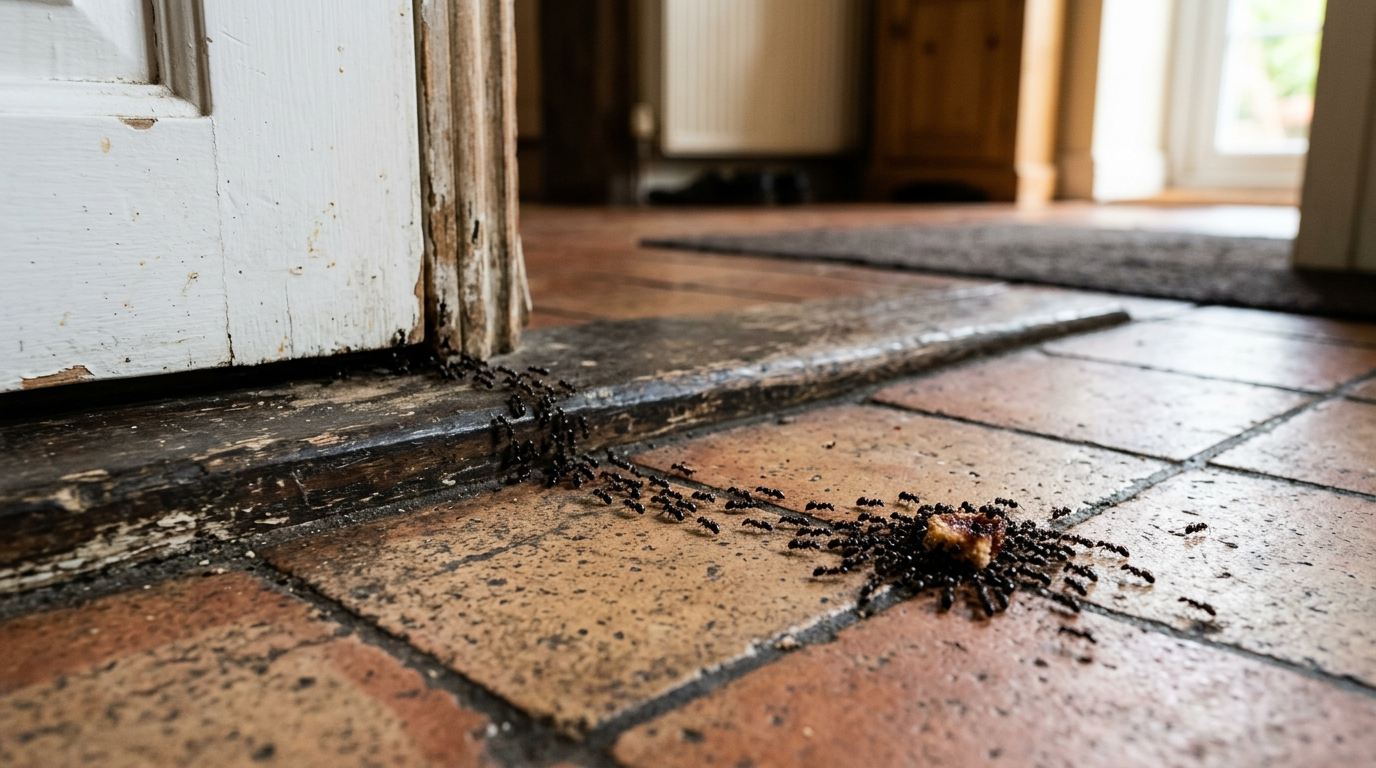
Black garden ants, which are the species most commonly found in UK homes, nest in soil and under paving outside. They enter buildings in summer through gaps at the base of walls, under doors, through cracks in floor coverings, around pipe entry points, and through ventilation gaps. They are following pheromone trails left by scout workers that have already found food inside.
Once a trail is established, large numbers of workers follow it. You will often see a line of ants moving in both directions, with workers heading in to collect food and returning to the colony. The trail can originate from a nest several metres away. The ants you see inside are only a small fraction of the colony.
Entry points to check: the gap under your back door, the join between floor tiles and the skirting board, gaps around any plumbing that enters through the kitchen floor, and the external face of any wall where you can see ants entering or leaving.
What is the best product for ants?
Ant gel bait is significantly more effective than sprays for eliminating a colony. The active ingredient in a good gel bait is typically indoxacarb or imidacloprid, and it works slowly enough that workers carry it back to the nest before it takes effect. The key is patience. You need to leave the gel out, resist the urge to squash the workers feeding on it, and let the product do its job over several days.
Apply small pea-sized drops of gel directly onto the ant trail, near the entry point. Do not use spray or any other product near the gel, as this will repel workers from the bait. Replace the gel every two to three days or when it is consumed.
As an Amazon Associate I earn from qualifying purchases.
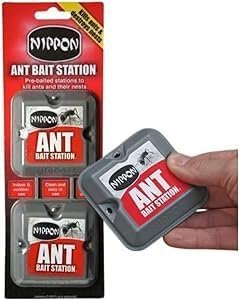
What to look for: an enclosed, pre-baited ant bait station containing spinosad as the active ingredient. These are cleaner and safer to place than open bait because the bait is kept inside the station. Avoid cheap ant bait stations that do not clearly list the active ingredient. Always read the label before use.
Check price on AmazonOnce the colony is eliminated, a residual perimeter spray applied around the base of external walls and entry points helps prevent re-entry. Look for a product containing cypermethrin or deltamethrin for outdoor use.
As an Amazon Associate I earn from qualifying purchases.
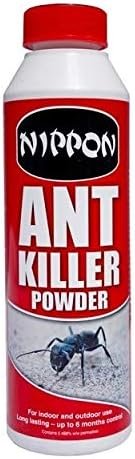
What to look for: a ready-to-use ant killer powder containing permethrin as the active ingredient. It should come in a puffer pack so you can apply a light dusting along ant runs, cracks, gaps, door thresholds, and around the nest entrance.
Use a thin layer, not big piles. Keep it away from food areas, children, pets, ponds, drains, and watercourses. Do not use it on soft furnishings. Always read the label before use.
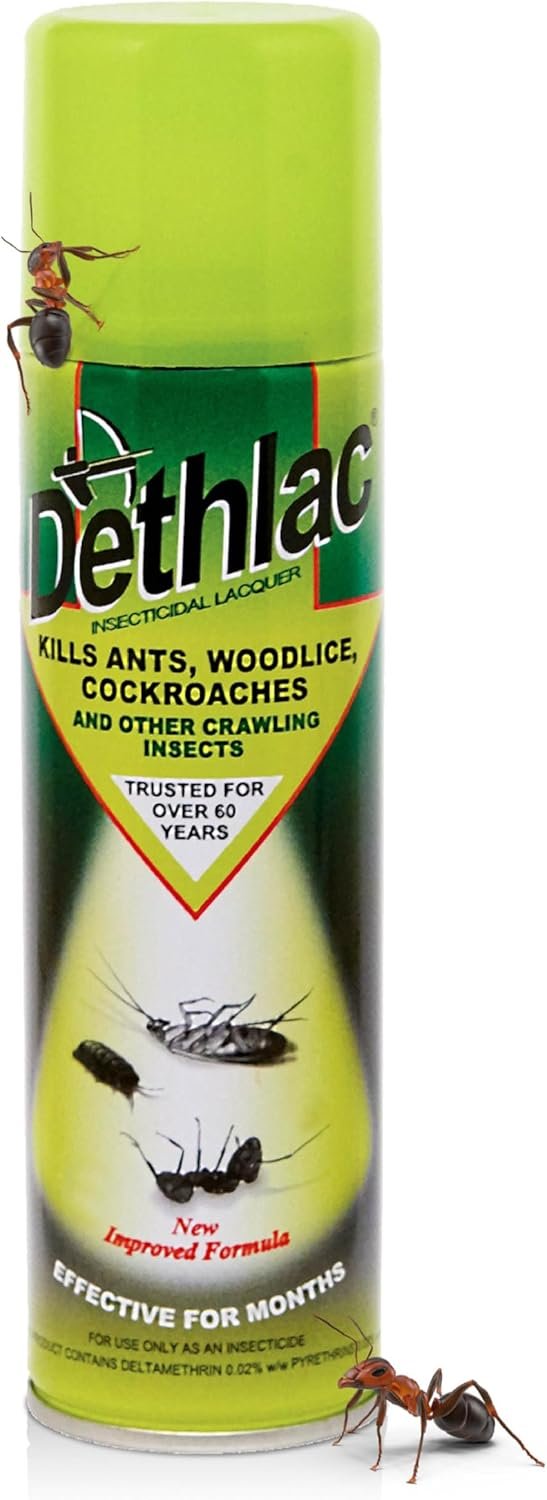
What I use: this is the stronger stuff professionals carry in the van for a bad ant problem. It does the job when the bait stations and powder are not enough on their own. It is more powerful, so treat it with respect. Always read the label before use, follow it to the letter, and wear a mask when you are applying it.
Check price on AmazonAs an Amazon Associate I earn from qualifying purchases.
What to avoid
Spray products contain repellent chemicals that deter ants. If you apply spray near gel bait, workers will avoid the whole area, including the bait. The two products work on opposite principles. Use one or the other, not both in the same location.
I know it is tempting when you see ants crawling across your kitchen counter. But those workers eating the gel are doing exactly what you want. Leave them alone. Kill them and you slow down the process of the bait reaching the colony.
This kills some ants near the surface but rarely reaches the queen, which is deep in the nest. The colony recovers quickly. It is not an effective solution for a persistent problem, though it can knock back a small external nest temporarily.
How to use it properly
Apply gel in small dots directly on the ant trail. Use four to six application points per room. Do not apply too much, as workers feed on tiny amounts. Refresh every two to three days. Within a week you should see the number of workers reducing. Full elimination of a colony can take seven to fourteen days.
After the infestation is cleared, seal entry points with decorator's caulk or silicone sealant, particularly the gap under external doors and around plumbing entry points. Apply the perimeter spray outside, paying attention to the base of the wall and any visible nest entrance in paving or soil.
When to call a professional
Ant infestations are usually manageable without a professional if you use the right product. However, call a pest controller if:
- You have pharaoh ants or ghost ants (small, pale ants often found in heated buildings). These are harder to treat and require a different approach
- Gel bait has been in place for two weeks with no reduction in activity
- The infestation is in a food preparation area of a business where you need professional sign-off
- Multiple colonies appear to be active
Frequently asked questions
Spray kills the workers you can see but does nothing to the queen underground. The colony simply sends more workers. The only way to stop the cycle is slow-acting bait that workers carry back to the nest and share with the queen.
The black garden ant (Lasius niger) is by far the most common. It enters kitchens in summer looking for sweet food and water. Ghost ants and pharaoh ants are also found, particularly in heated buildings, and require a different treatment approach.
Gel bait typically takes three to seven days to show a noticeable reduction, and up to two weeks to fully eliminate the colony. It works slowly by design. Do not clear away the bait or kill workers feeding on it during this period.
Yes. Flying ants are reproductive males and virgin queens from garden ant colonies. They swarm on warm summer days to mate. After mating the males die and the queens shed their wings. The swarm itself does not cause a new infestation inside your home.
You can eliminate the active colony and reduce re-entry by sealing gaps and treating the perimeter. However, garden ant colonies are numerous and new ones can establish nearby each year. Summer prevention is easier than treating a full infestation.