To get rid of clothes moths, you need to deal with three things in parallel: trap and monitor adult males using pheromone traps, kill larvae in fabrics by washing or freezing affected items, and apply an insecticide spray to carpets, wardrobe interiors, and skirting boards where larvae feed and pupate. Cedar balls and lavender repel moths from entering a space but do nothing to an existing infestation. They have their place as prevention, but not as treatment.
How do clothes moths get into your house?
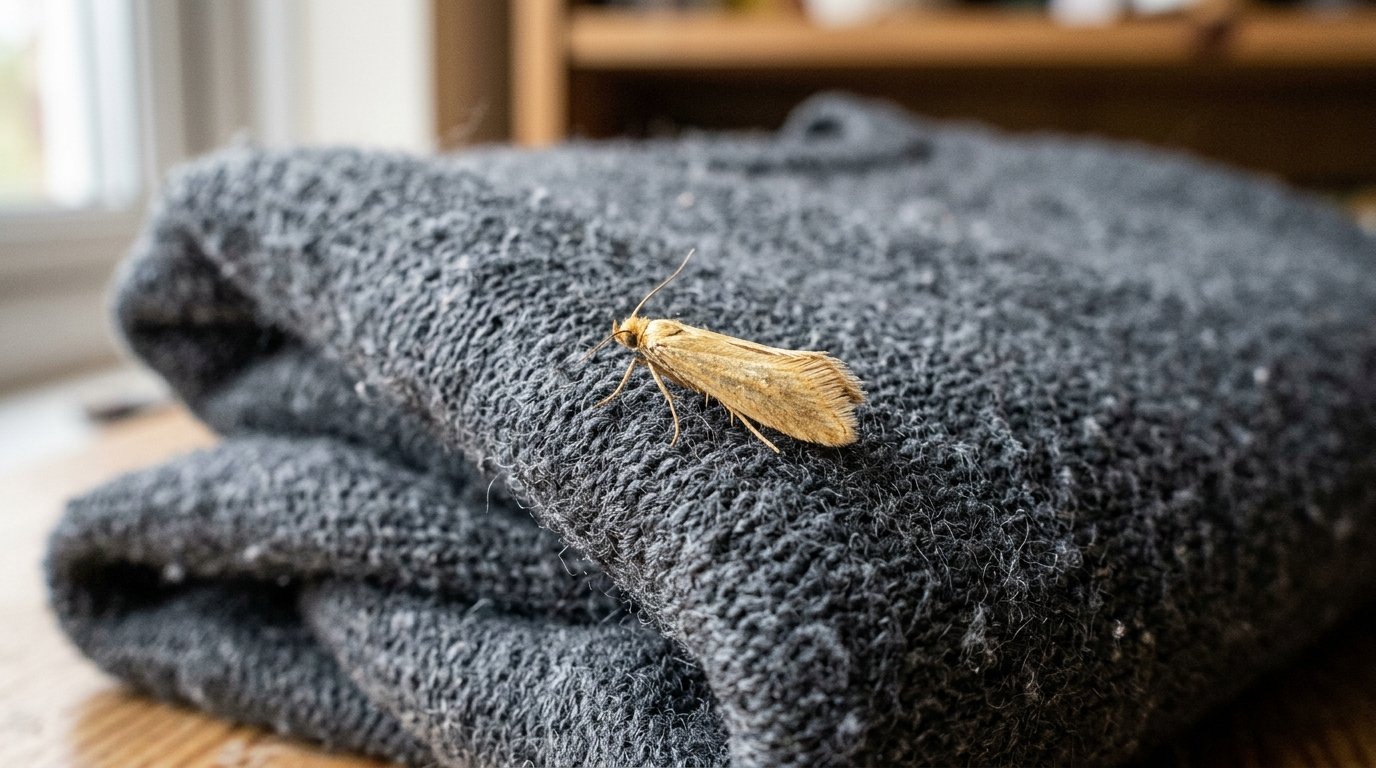
Clothes moths are small, golden-beige moths about 6 to 8mm long that actively avoid light and fly weakly. They are introduced into homes most commonly on second-hand clothing, vintage rugs, donated or charity shop woollens, and upholstered furniture. They can also enter on their own through open windows in summer, though this is a less common route than contaminated items.
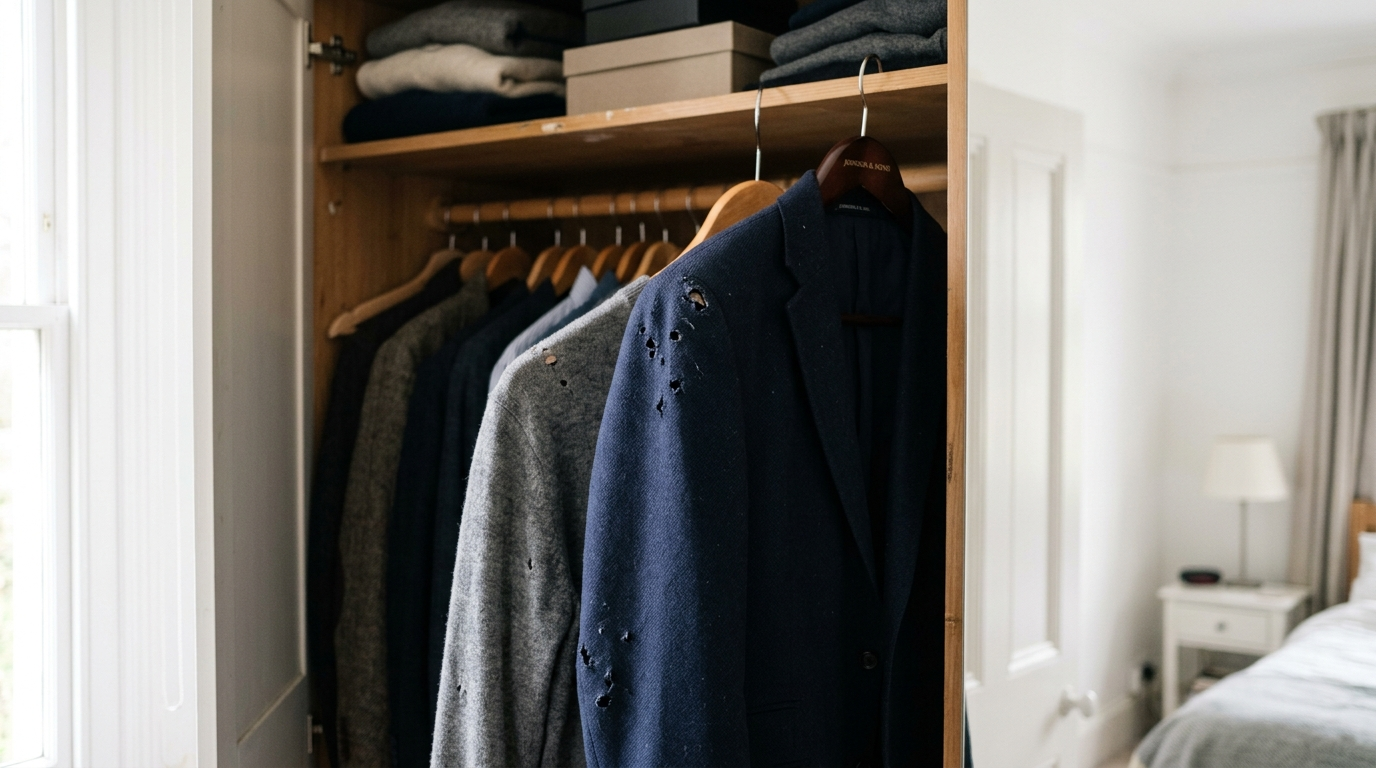
Once inside, female moths lay eggs on natural fibres, particularly in dark, undisturbed areas. Wardrobes that are rarely fully emptied, carpets under heavy furniture, and folded stored knitwear are ideal breeding grounds. The larvae hatch and feed on the keratin in wool, cashmere, silk, and feathers. The damage you find in your clothing is caused by these larvae, which can feed for several months before pupating.
Bird nests containing feathers and down, which are sometimes found in chimneys and roof spaces, are a natural reservoir for clothes moths and can be a source of ongoing infestation if left in place. If you have a persistent moth problem and cannot identify an obvious source indoors, check the chimney and any accessible loft space.
What is the best product for clothes moths?
Pheromone traps are the first thing to put in place. These are flat, sticky card traps baited with a synthetic female moth pheromone that attracts and catches adult male moths. Catching males disrupts mating and reduces the next generation. They also act as a monitor so you know where activity is highest and whether numbers are reducing over time.
Place one trap in each affected room, particularly inside wardrobes, in airing cupboards, and in any room with wool carpeting. Replace them every three months or when the sticky surface is covered.
As an Amazon Associate I earn from qualifying purchases.
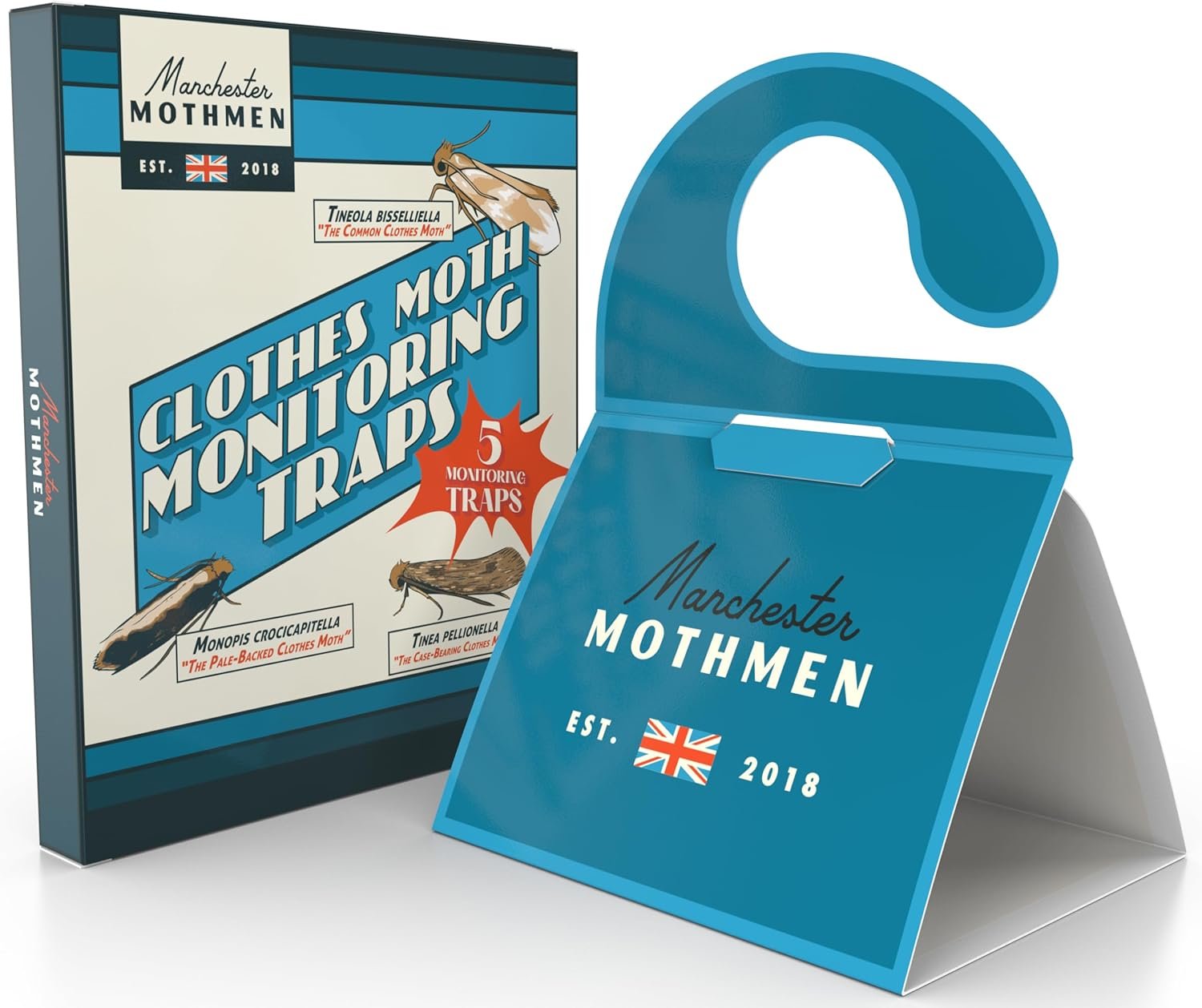
What to look for: a clothes moth monitoring trap. These use a scent lure to attract and catch the adult male moths on a sticky pad, which tells you how bad the problem is and where they are worst. They will not clear an infestation on their own, but they are the best way to keep an eye on it and to know if your treatment is working. Hang one in each wardrobe or affected room and check it every week or two.
Check price on AmazonUse one trap per room in affected areas. Check monthly and replace every three months or when full.
For treating carpets, wardrobe interiors, and skirting boards where larvae are active, a permethrin-based moth killer spray applied to these surfaces kills larvae on contact and provides some residual protection. It should not be sprayed directly onto clothing but is safe on hard surfaces and carpet once dry.
As an Amazon Associate I earn from qualifying purchases.
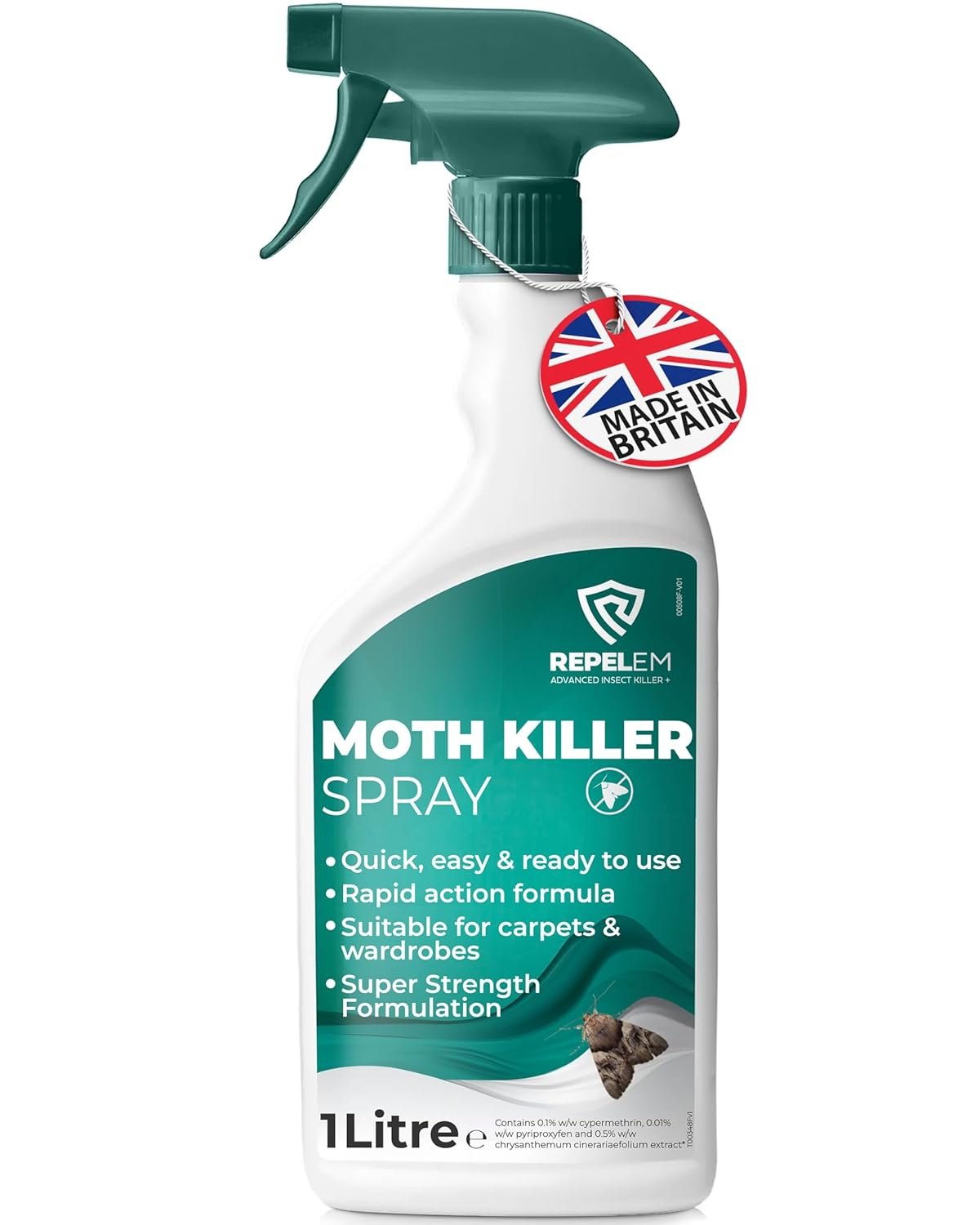
What to look for: a clothes moth killer spray containing permethrin, formulated for use on carpets, wardrobe interiors, and upholstery. Apply to affected areas, allow to dry fully before replacing items, and repeat after three months. Always read the label before use.
Check price on AmazonWhat to avoid
Cedar and lavender have a mild repellent effect on adult moths and may deter them from laying eggs in a treated area. They are a reasonable preventive measure once an infestation has been cleared. But they have no effect on larvae that are already present and actively feeding. Using them as your sole response to an active moth infestation will not stop the damage. Treat the infestation first, then use cedar or lavender as ongoing prevention.
The adult clothes moth does not eat fabric. It lives only to mate and lay eggs. Killing adults with pheromone traps is useful for monitoring and reducing breeding, but you must also address the larvae in carpets, fabric, and wardrobes where the actual damage occurs. Focusing only on the flying moths you can see misses most of the problem.
Clothes moth larvae thrive in undisturbed, dark areas. Stored jumpers folded in a drawer, rugs rolled up in a cupboard, and the underside of carpets under heavy furniture are exactly the conditions they prefer. Regular disturbance, even just moving items and shaking them out, significantly reduces larval development in those areas.
How to use it properly
Begin with a thorough sort of all affected areas. Remove all clothing from wardrobes and check each item for damage. Items showing holes or containing larvae should be washed at 60 degrees if the fabric allows, or sealed in a plastic bag and placed in a freezer at minus 18 degrees for at least 72 hours, which kills all life stages. Items that cannot be washed or frozen and are heavily infested should be discarded.
Vacuum the entire wardrobe interior including the floor, sides, and back. Vacuum carpets thoroughly, moving furniture to reach areas underneath. Empty the vacuum bag immediately outside. Then apply the permethrin spray to the wardrobe interior, carpet edges, and skirting boards. Allow to dry before replacing clothing.
Place pheromone traps inside wardrobes and in affected rooms. Monitor them monthly. A reduction in catch numbers over time indicates the treatment is working. Repeat the spray treatment after three months. Store off-season woollens in sealed plastic bags or vacuum storage bags to prevent re-infestation.
When to call a professional
Clothes moth infestations can usually be managed without professional help if the treatment is thorough. Call a pest controller if:
- Damage is extensive across multiple rooms including wool carpets throughout the property
- Pheromone trap catches remain high after three months of treatment
- The infestation appears to be coming from a structural source such as a bird nest in the chimney or roof space
- You have valuable antique rugs or textiles where professional treatment is preferable to risking DIY chemical application
Frequently asked questions
No. Clothes moth larvae eat keratin, a protein found only in natural animal fibres: wool, cashmere, silk, mohair, angora, and feathers. Pure synthetic fabrics are not at risk. Blended fabrics containing some natural fibre can be damaged in the natural-fibre content.
Clothes moths have a long life cycle and larvae overwinter in carpets, behind skirtings, and in undisturbed fabric. If you only treat the adults and do not address larvae in the environment, the population re-establishes from surviving larvae each spring. Treat carpets and wardrobe interiors, not just the flying moths.
No. Clothes moths are small golden-beige moths found near fabric and avoid light. Pantry moths are found in food cupboards eating cereals and dried food. Treatment for each is completely different. Pheromone traps are species-specific, so make sure you buy the right one.
Irregular holes in wool or cashmere items, particularly in dark, folded areas such as underarms and stored folds. You may also find silken tubes or cases left by larvae, and shed skins. Carpet damage appears as thinning or bare patches, usually under furniture or along edges.
Most commonly on second-hand or charity-shop clothing, vintage rugs, and donated woollen items. They also enter on their own through open windows, and can originate from bird nests containing feathers in chimneys or roof spaces.