The most practical way to deal with grey squirrels in a loft is to set a cage trap baited with peanuts or hazelnuts, check it at least twice a day, and humanely dispatch any catch. You must then proof every entry point before they can re-enter. Be aware that it is illegal to release a caught grey squirrel back into the wild under UK law. This is not optional, it is a legal requirement.
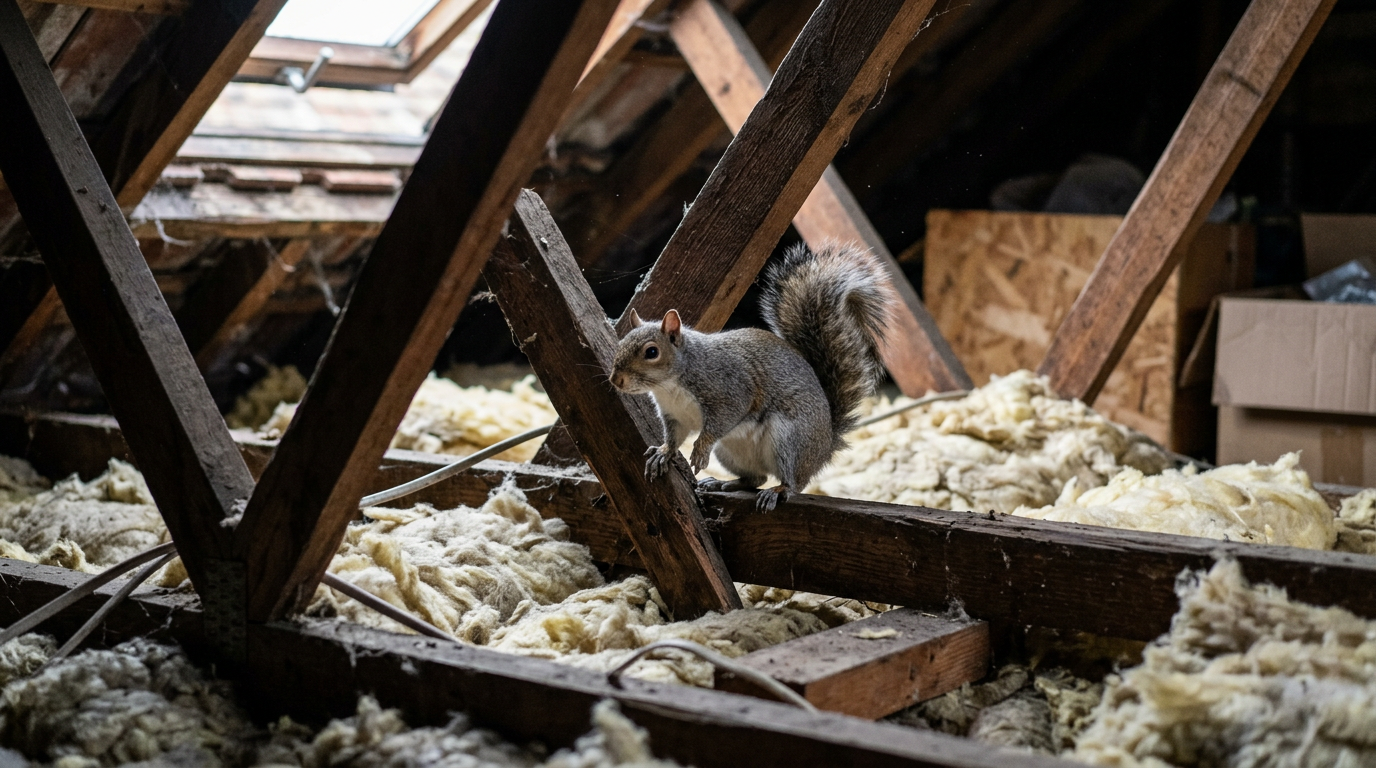
How do squirrels get into your house?
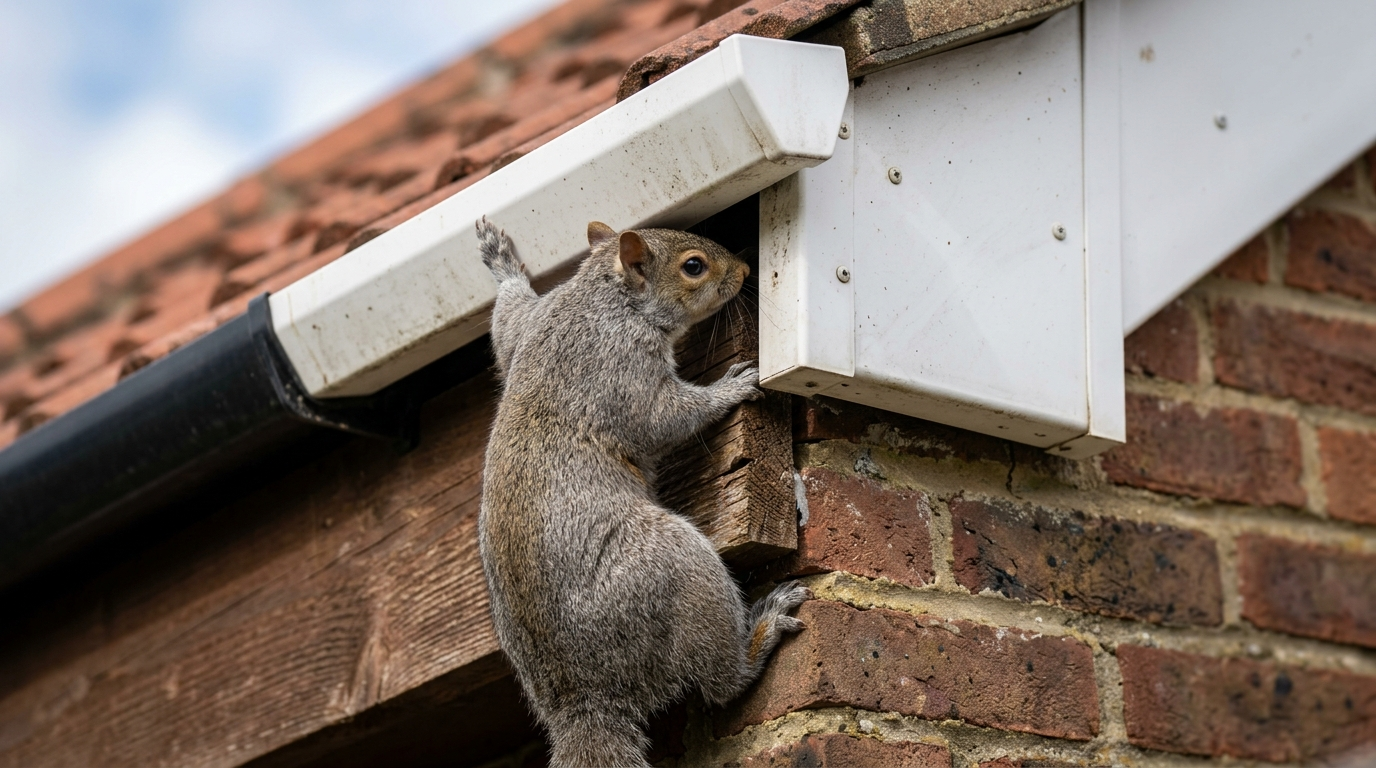
Squirrels are strong gnawers and athletic climbers. They most commonly enter loft spaces through gaps in fascia boards, soffit boards, and the junction between the roof covering and the walls. Old or rotten timber is particularly vulnerable because squirrels will gnaw at a small existing gap to enlarge it within hours.
They also enter through damaged roof tiles, gaps around lead flashing, and occasionally through open vents in gable ends. A squirrel does not need a large gap to start with. If there is a weak spot in your roofline, it will find it, particularly in autumn when they are actively looking for nesting sites.
If you have large trees close to the roofline, these provide easy access. Overhanging branches act as a bridge from the garden to your roof. Cutting back branches to at least 2 metres from the building significantly reduces the risk of entry.
What is the best product for squirrels?
A cage trap is the correct tool for a domestic squirrel problem. These are wire mesh traps that catch the squirrel alive and unharmed. They are baited with whole peanuts, hazelnuts, or maize, which squirrels find irresistible. The trap has a spring-loaded door that closes when the trigger plate inside is disturbed.
Place the trap in the loft space along the route the squirrel uses, or at the entry point. Cover it with a piece of sacking or old towel to make it feel like a tunnel, and the squirrel will enter more readily. Bait it for a day without setting it, so the squirrel gets used to feeding from it, then set it the following day.
As an Amazon Associate I earn from qualifying purchases.
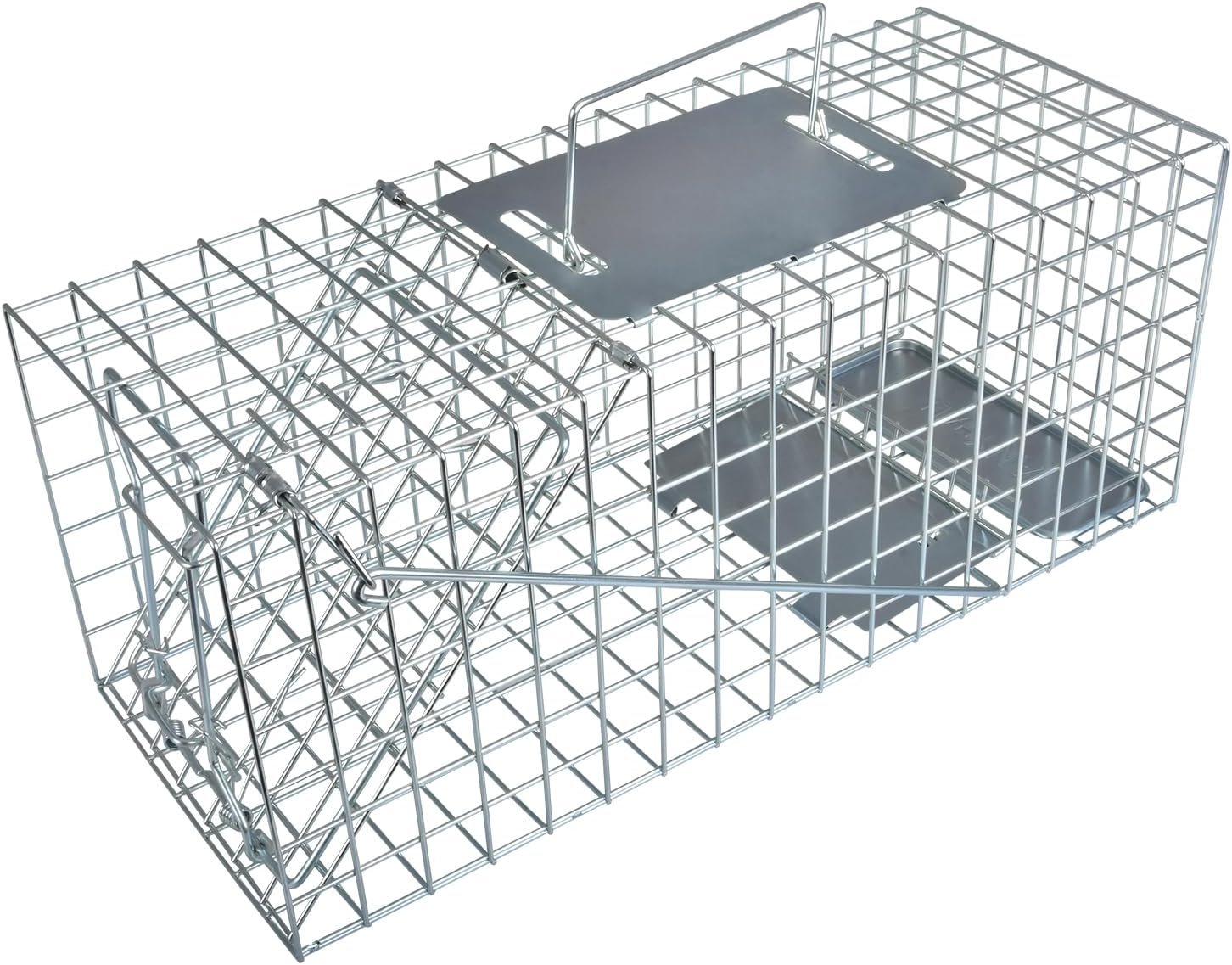
What to look for: a sturdy steel live-capture cage trap sized for squirrels. The squirrel goes in after the bait and a door drops behind it. One thing you must know: by law a grey squirrel caught alive cannot be released back into the wild, it is an offence, so once caught it has to be dispatched humanely. That puts a lot of people off the cage route, and it is a big reason squirrel trapping is often best left to a professional. If you do use one, bait it with peanuts and check it often, because no animal should be left in a trap for long.
Check price on AmazonAs an Amazon Associate I earn from qualifying purchases.
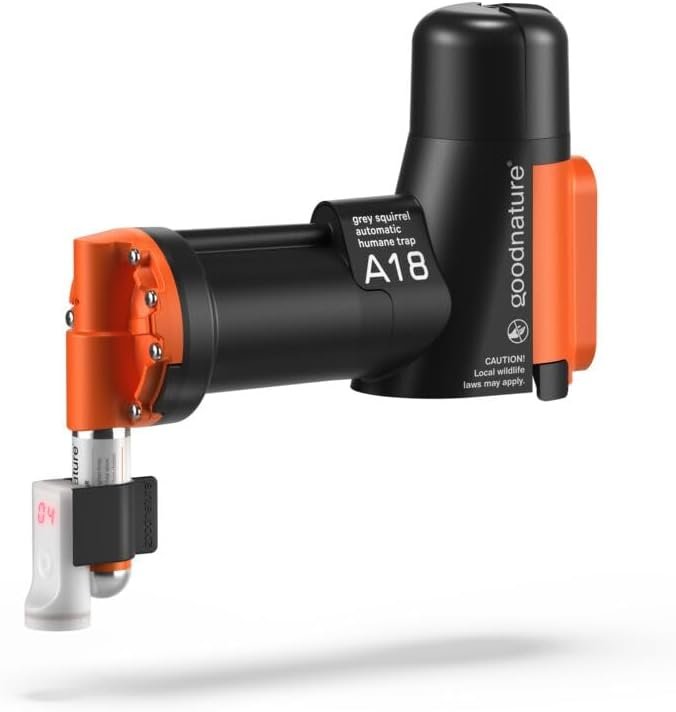
What I use: an automatic self-resetting squirrel trap, the Goodnature type. It is a gas-powered trap that gives a quick, humane kill and then resets itself ready for the next one, so it keeps working without you resetting it each time. It is the sort of kit used where there is more than one squirrel to deal with. Fix it to a tree or beam on the run they use, bait it, and let it work. Top up the bait and gas as the instructions say.
Check price on AmazonAs an Amazon Associate I earn from qualifying purchases.
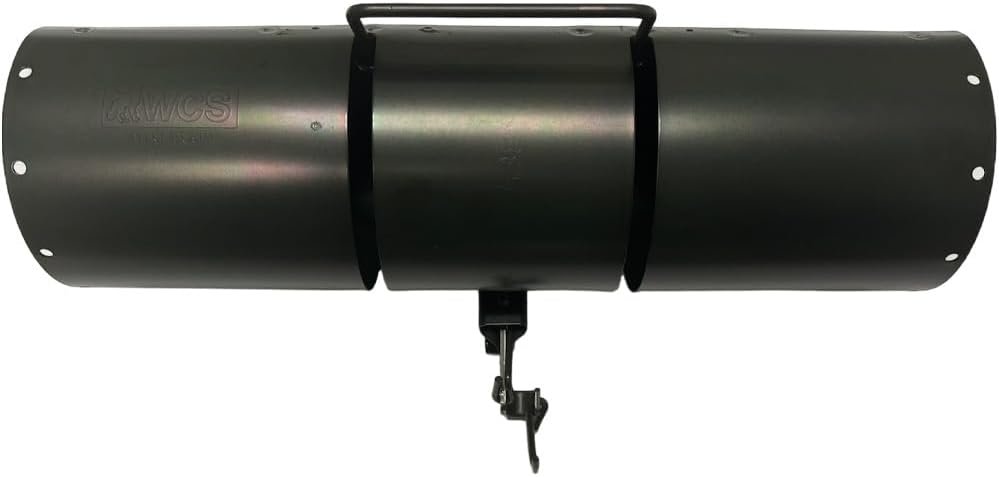
What to look for: a trap tunnel, also called a trap box. This is the wooden or plastic tunnel that a spring trap sits inside. It does two jobs: it guides the squirrel through onto the trap, and it stops pets, children, birds and other animals getting to the trap. A spring trap should always be used inside a tunnel like this, never out in the open. Set it along the run the squirrels use, in the loft or along a beam.
Check price on AmazonAs an Amazon Associate I earn from qualifying purchases.
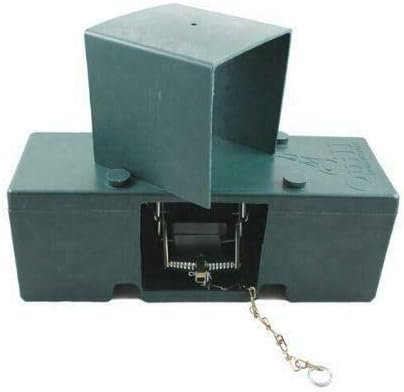
What I use: a squirrel spring trap, the Quill type. This is a quick-kill trap that goes inside the trap tunnel above, never out in the open. Used in the tunnel, it deals with the squirrel quickly and humanely. This is proper trapping kit, so read the instructions, set it carefully, and keep it inside the tunnel at all times so nothing else can get to it. If you are not confident setting a spring trap, this is the point to bring in a professional.
Check price on AmazonWhat to avoid
This is illegal. Under the Wildlife and Countryside Act 1981, grey squirrels are a Schedule 9 species. Releasing a caught grey squirrel back into the wild is a criminal offence carrying a potential fine. If you catch one, you must dispatch it humanely. A pest controller can do this for you if needed.
If you block the way out before the squirrel is removed, you trap it inside the loft. It will gnaw through the structure trying to escape, potentially causing more damage than leaving it free. Always clear the animal first, then proof the entry points.
One-way funnels let a squirrel leave but not return. They work in theory but in practice a squirrel that cannot get back in will often chew a new entry point nearby. They are best used in combination with proofing all other entry points at the same time.
How to use it properly
Check cage traps at least every four hours during daylight and last thing in the evening. A squirrel left in a trap for a long period will suffer. Under the Animal Welfare Act you have a duty to minimise suffering, so regular checking is not just good practice, it is a legal obligation.
Once the squirrel is caught, dispatch it humanely. The most common professional method is a sharp blow to the back of the head, which is instant. If you are not confident doing this yourself, contact a pest controller or a local country sports contact who can assist.
After the squirrel is removed, inspect the loft thoroughly for nesting material, damage, and any additional entry points. Replace chewed insulation, check electrical cables for damage (call an electrician if in any doubt), and proof every gap you find with heavy-gauge wire mesh and appropriate sealant or timber repairs.
When to call a professional
Call a pest controller if:
- You are not confident about humanely dispatching a caught squirrel
- The entry point is structural or high up and you cannot safely access it
- Electrical cables in the loft have been chewed (have this assessed by an electrician immediately regardless)
- You have caught and removed squirrels but activity continues, suggesting ongoing entry from a different point
- There is a nest with young present
Frequently asked questions
No. Under the Wildlife and Countryside Act 1981, grey squirrels are listed as an invasive non-native species. It is illegal to release a trapped grey squirrel back into the wild. If you catch one, it must be humanely dispatched.
Warfarin-based bait in hoppers is legal in some controlled situations but is generally restricted to professional or agricultural use. For a domestic loft infestation, cage trapping is the practical and safe option available to householders.
Most commonly through gaps in fascia and soffit boards, particularly where the timber has warped, rotted, or come away from the roof structure. They will also gnaw through weak spots in wood very quickly once they find a starting point.
Squirrels gnaw constantly to keep their teeth worn down. In a loft this means chewed roof joists, destroyed insulation, and gnawed electrical cables which are a fire risk. Treat any squirrel in a loft as urgent and deal with it quickly.
Squirrels are most active in autumn and early winter when they are seeking warm nesting sites. This is when most people first notice them in loft spaces. However, once established, they can be present and causing damage year-round.